Ergonomic Assessment
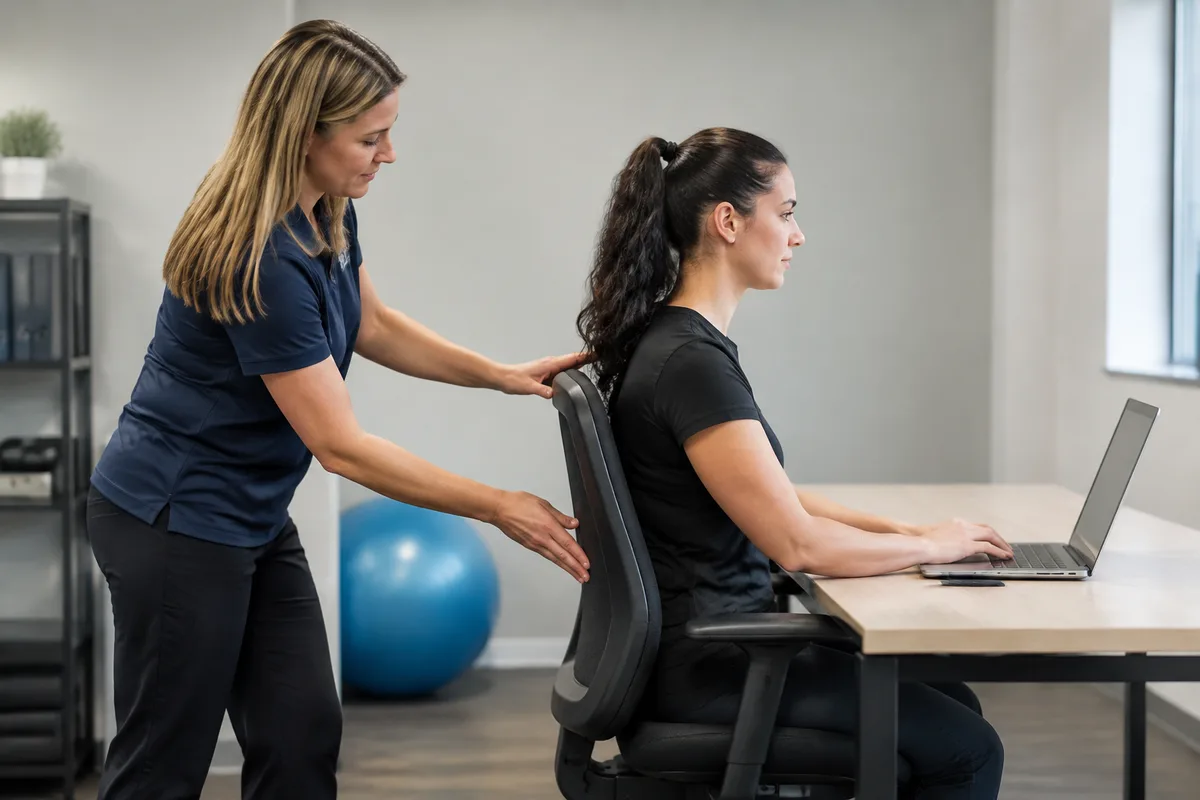
Ergonomic Assessment
An ergonomic assessment looks at how you sit, stand, lift, and move during daily work or home tasks. The goal is to spot postures or repetitive motions that place strain on joints, muscles, and nerves, and to suggest adjustments that reduce that strain before pain develops or returns.
What an Assessment Looks At
- Workstation Setup — desk, chair, monitor, and keyboard positioning relative to posture.
- Movement Patterns — how you reach, bend, lift, or repeat tasks throughout the day.
- Body Mechanics — alignment of the spine, shoulders, hips, and wrists during common activities.
- Environmental Factors — seating, lighting, and equipment placement that influence strain over time.
Who This Can Help
- Office and Desk Workers — addressing neck, shoulder, or wrist discomfort tied to prolonged sitting or typing.
- Manual and Physical Laborers — reviewing lifting, carrying, and repetitive-motion tasks.
- Those Recovering from Injury — adjusting tasks and setups to support ongoing rehabilitation.
How It Fits Your Care
Findings from an ergonomic assessment often connect with other services offered here, including Work Injury Rehabilitation, Injury Prevention, and Work Conditioning. Recommendations may include changes to your workstation or routine, along with exercises to build strength and tolerance for the specific demands of your job or daily activities.
This content is for general information only and isn't medical advice. Talk with a qualified provider about your own situation. If you have a medical emergency, call 911.