Spinal Cord Rehabilitation
Spinal Cord Rehabilitation
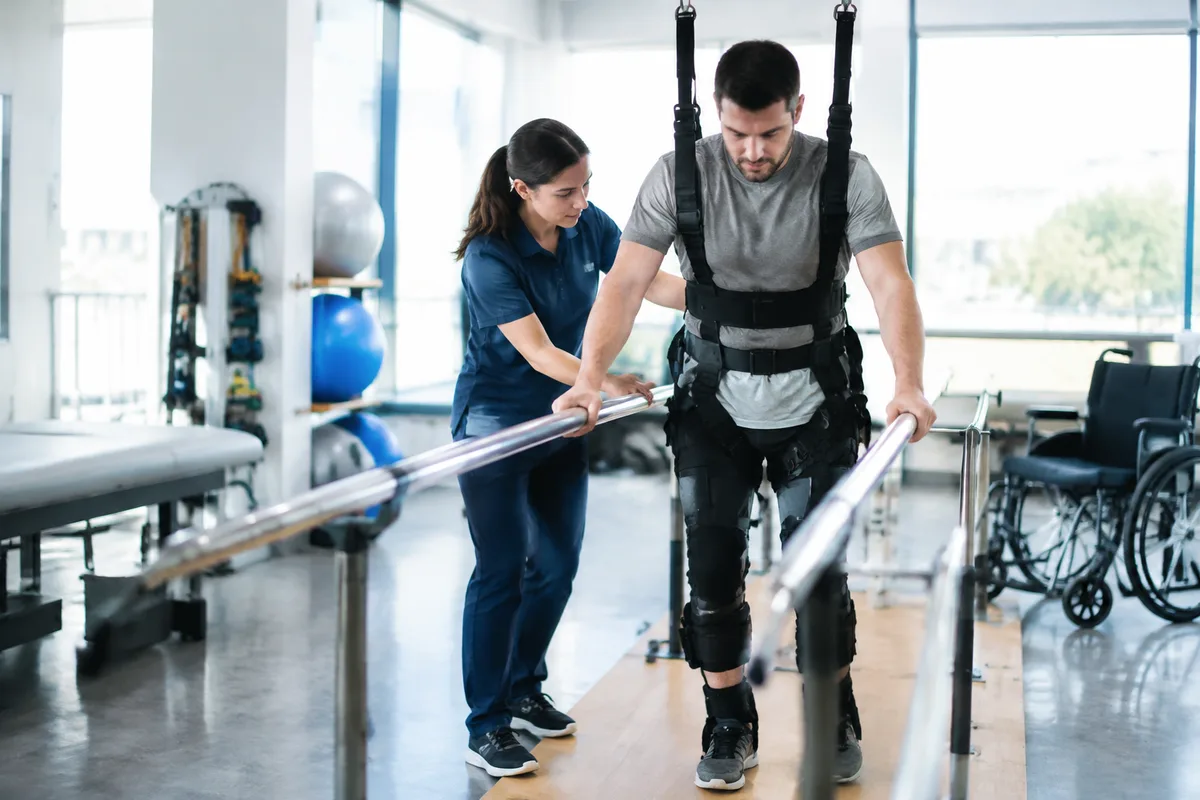
Spinal cord injuries can affect movement, sensation, balance, and daily function in ways that vary widely from person to person. Spinal Cord Rehabilitation focuses on helping patients regain as much strength, mobility, and independence as possible through a structured, hands-on program tailored to each individual's needs and goals.
What This Service Addresses
- Muscle Weakness — targeted exercise to rebuild strength in affected muscle groups.
- Loss of Mobility — guided movement training to improve transfers, walking, and daily activities.
- Balance and Coordination Deficits — structured retraining to support safer movement.
- Muscle Re-Activation — supportive techniques to help weakened muscles respond and engage again.
Tools Used in Treatment
- Treatment Tables — adjustable positioning for hands-on therapy and supported exercise.
- Electrical Stimulation Units — gentle current to help re-activate weakened muscles.
- Pulley Systems — overhead equipment used to restore range of motion in the arms and shoulders.
- Balance Boards and Pads — equipment that challenges stability and helps retrain coordination.
- Stationary Bikes and Treadmills — supervised, low-impact tools for rebuilding endurance and gait.
A Gradual, Individualized Approach
Recovery after a spinal cord injury takes time, and programs are adjusted as function changes. Exercises often progress from supported, low-load movement toward more independent activity as strength and control improve.
This content is for general information only and isn't medical advice. Talk with a qualified provider about your own situation. If you have a medical emergency, call 911.