Vestibular Therapy
Vestibular Therapy
Vestibular therapy addresses dizziness, vertigo, and balance problems that stem from the inner ear or the way the brain processes balance signals. Patients often seek this care after an inner-ear infection, a concussion, a fall, or ongoing unsteadiness that affects daily walking and activity. Treatment focuses on retraining the balance system so the body and eyes work together more reliably.
What This Service Addresses
- Vertigo — spinning or tilting sensations tied to inner-ear signals.
- Balance Deficits — unsteadiness that increases fall risk during standing or walking.
- Gaze Instability — blurred or jumping vision with head movement.
- Post-Concussion Dizziness — balance and coordination issues following head injury.
How Sessions Are Structured
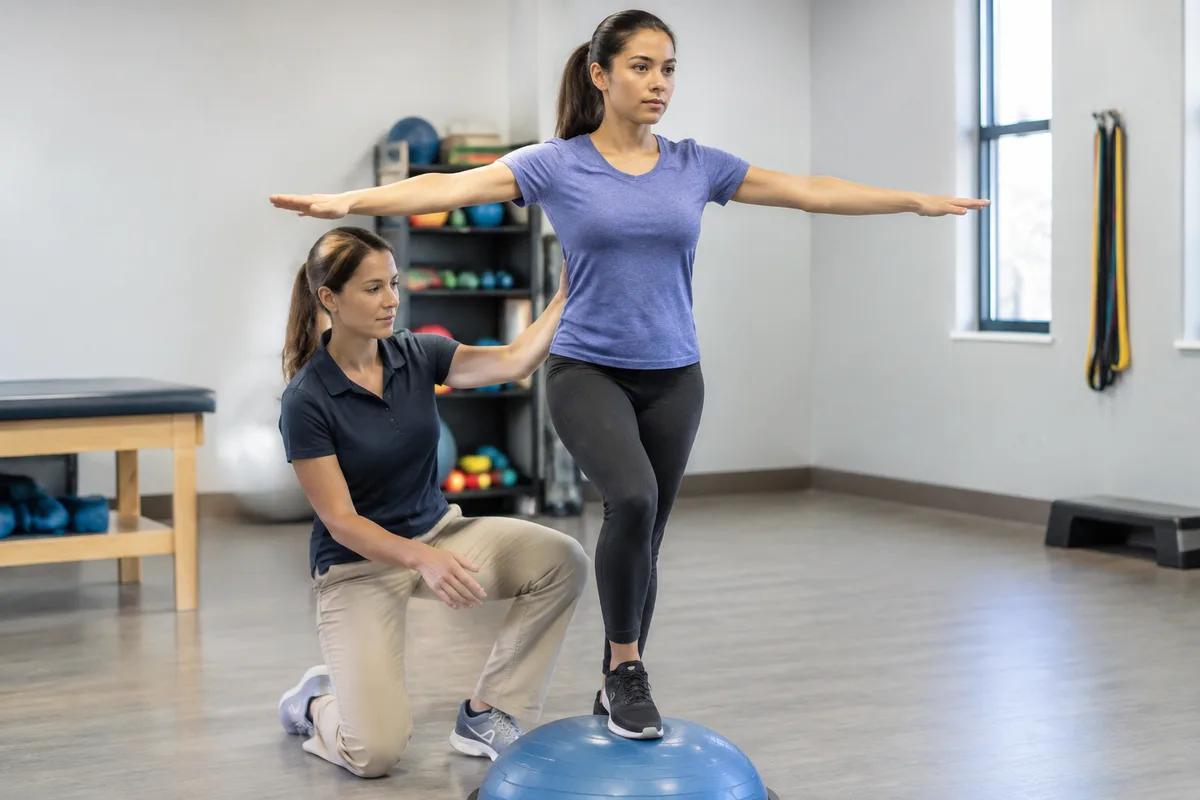
A typical plan combines guided head and eye movement exercises with progressive balance challenges. Sessions may use on-site equipment to support this work.
- Balance Pads — soft foam surfaces that challenge stability in a controlled way.
- Balance Boards — wobble boards that train coordination and proprioception.
- Exercise Mats — cushioned surfaces for supported floor-based balance and mobility drills.
Who Benefits
This service fits patients recovering from inner-ear disorders, concussion, or falls, as well as those with general unsteadiness that limits confidence in daily movement. It is often paired with fall prevention strategies and balance training for a fuller approach to safe, steady movement.
This content is for general information only and isn't medical advice. Talk with a qualified provider about your own situation. If you have a medical emergency, call 911.