Walking Rehabilitation
Walking Rehabilitation
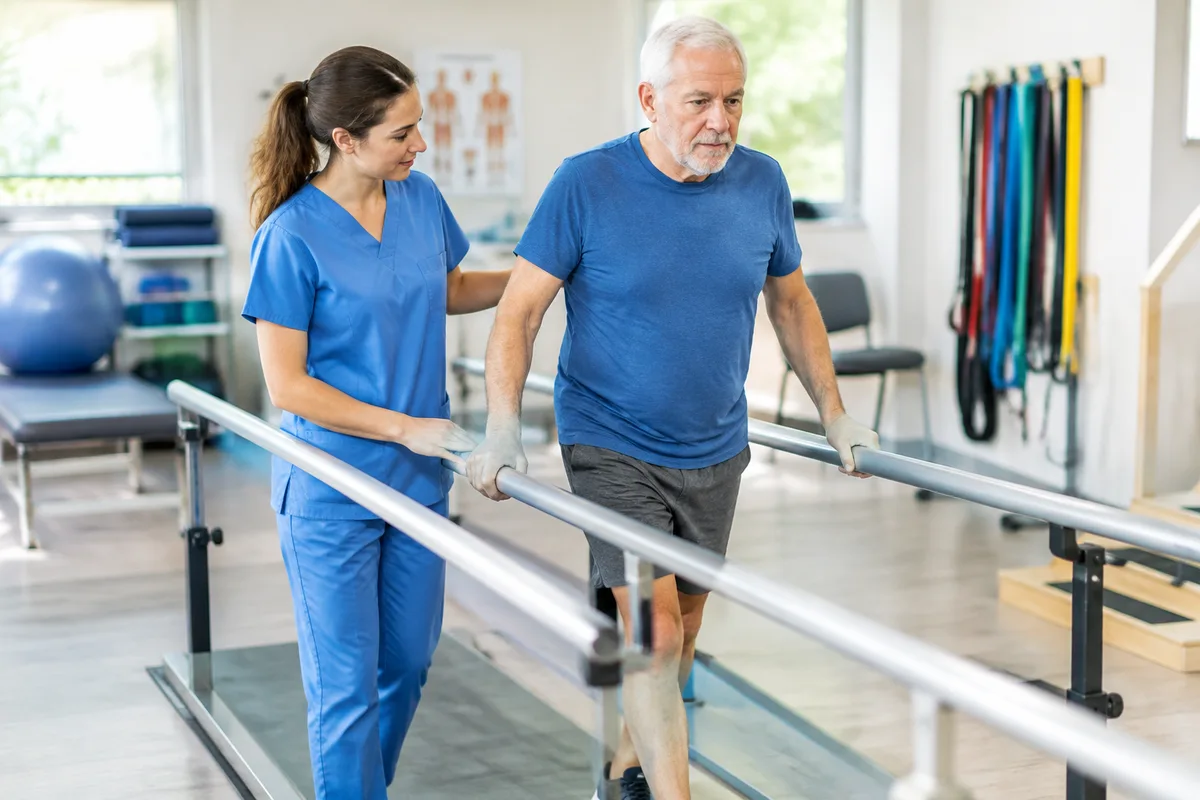
Walking Rehabilitation helps patients recover the strength, balance, and coordination needed to move safely and confidently. This service is often sought after surgery, injury, stroke, or a period of reduced mobility, when gait patterns become unsteady, painful, or inefficient. A tailored program addresses the specific factors limiting a person's walking ability, whether that involves weakness, joint stiffness, balance deficits, or pain.
What This Service Involves
- Gait Assessment — evaluating how a person walks to identify weakness, imbalance, or compensations affecting movement.
- Strength and Endurance Building — progressive exercises to rebuild the muscle capacity needed for steady, sustained walking.
- Balance and Coordination Work — retraining stability to reduce fall risk and improve confidence on varied surfaces.
On-Site Tools That Support Progress
- Treadmills — supervised walking sessions to restore gait patterns and cardiovascular fitness.
- Balance Pads and Balance Boards — challenge stability and retrain proprioception and ankle control.
- Stationary Bikes — low-impact cycling to rebuild leg strength and joint motion without excess strain.
- Electrical Stimulation Units — used to help re-activate weak muscles that affect walking mechanics.
Whether recovering from a fall, surgery, or a neurological event, Walking Rehabilitation focuses on practical, functional progress toward safer, more independent movement.
This content is for general information only and isn't medical advice. Talk with a qualified provider about your own situation. If you have a medical emergency, call 911.