How to Lift Without Hurting Your Back
Most back pain does not come from a dramatic accident. It comes from ordinary moments: picking up a laundry basket, hoisting a toddler onto your hip, or carrying grocery bags up a few flights of stairs. These small, repeated movements add up over time, and the way you move during them matters more than most people realize.
The good news is that safe lifting is not complicated. It comes down to a few basic mechanics you can apply almost anywhere, whether you are at home, in the car, or out running errands around Brooklyn. Once these habits become automatic, they can help take unnecessary strain off your back and joints.
Why Everyday Lifting Adds Up
Your spine is built to handle a lot, but it works best when your whole body shares the load. Problems tend to show up when the back is doing most of the work alone, especially when you bend forward, twist, or reach while lifting something heavy or awkward.
Because these lifts happen so often, small mistakes can build up gradually. You might not feel anything the first few times you lift a box the wrong way, but the strain can accumulate until one ordinary lift finally causes discomfort.
This is why paying attention to basic mechanics is worth the effort, even for lighter items. The habits you build during everyday tasks often matter more for long-term back health than what happens during a single tough workout.
The Basic Mechanics of a Safer Lift
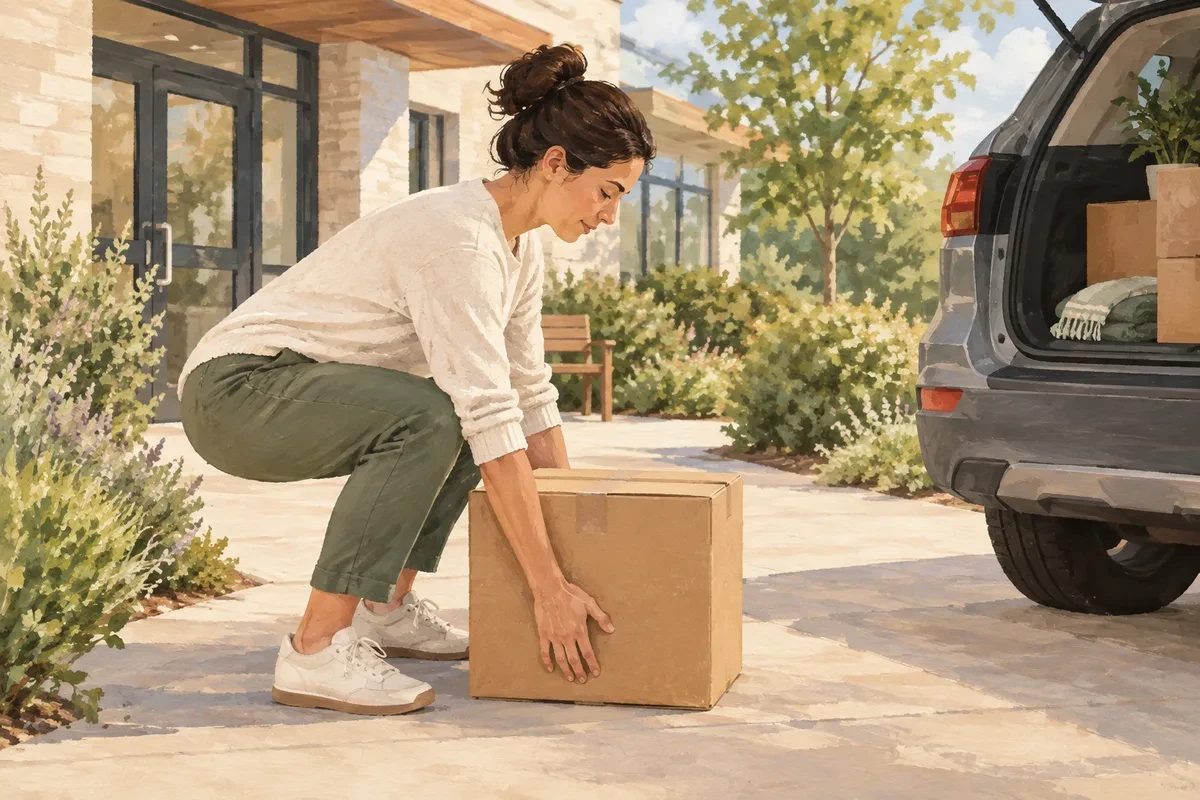
Start by getting close to whatever you are lifting. The farther an object is from your body, the more work your lower back has to do to support it. Standing close and centered keeps the load nearer to your body's natural center of gravity.
Bend at your hips and knees rather than rounding through your lower back. Think of it as lowering your whole body down to the object, almost like sitting into a chair, instead of folding forward at the waist.
Keep your core gently engaged as you lift, and let your legs do the pushing as you stand back up. Avoid twisting while you are holding something heavy. If you need to change direction, turn your feet and hips together rather than rotating just your upper body.
Lifting slowly and with control also makes a difference. Jerky or rushed movements are more likely to catch your muscles off guard, especially if you are tired or distracted.
Applying This to Groceries, Kids, and Boxes
Grocery bags seem harmless, but carrying several heavy bags on one side of your body can pull your spine out of its natural alignment. Try to split the weight evenly between both hands, or make an extra trip rather than overloading one arm.
Picking up a child adds another layer of challenge because kids move and shift their weight unexpectedly. Bend your knees and bring the child close to your chest before standing, rather than reaching out and lifting from a distance. If you are lifting a child from a crib or low surface, try to lower the surface or use a step so you are not leaning far forward.
Boxes and furniture often get lifted in tight spaces like hallways or stairwells, which can tempt you to twist or reach awkwardly. Take a moment to plan your path before you lift, and ask for help with anything that is heavy, bulky, or hard to see around.
Building Better Habits Over Time
Good lifting mechanics work best when they become second nature, not something you only remember after a strain shows up. Practicing these habits with lighter, everyday items helps your body get comfortable with the pattern, so it feels natural when you are dealing with something heavier.
Strengthening the muscles that support your hips, legs, and core can also make everyday lifting feel easier and steadier. A gradual, consistent approach to movement and strength tends to serve people better than occasional bursts of activity followed by long periods of sitting.
When It Might Be Time to Get Help
Occasional soreness after a long day of lifting is common, but pain that lingers, spreads, or keeps coming back deserves attention. So does any sharp pain, numbness, or weakness that shows up during or after lifting.
At Physical Therapy and Rehabilitation Center of Brooklyn, our team works with patients dealing with back pain, joint discomfort, and injuries related to everyday movement, along with a wide range of physical therapy and chiropractic care services. If lifting has started to feel uncomfortable or you want personalized guidance on movement and body mechanics, reach out to discuss your specific situation with our team.
Questions about your own care? The team at Spine and Orthopedic Rehabilitation Center is happy to help — call us at 929-909-5456 or request an appointment.
This content is for general information only and isn't medical advice. Talk with a qualified provider about your own situation. If you have a medical emergency, call 911.