Cold Laser Therapy
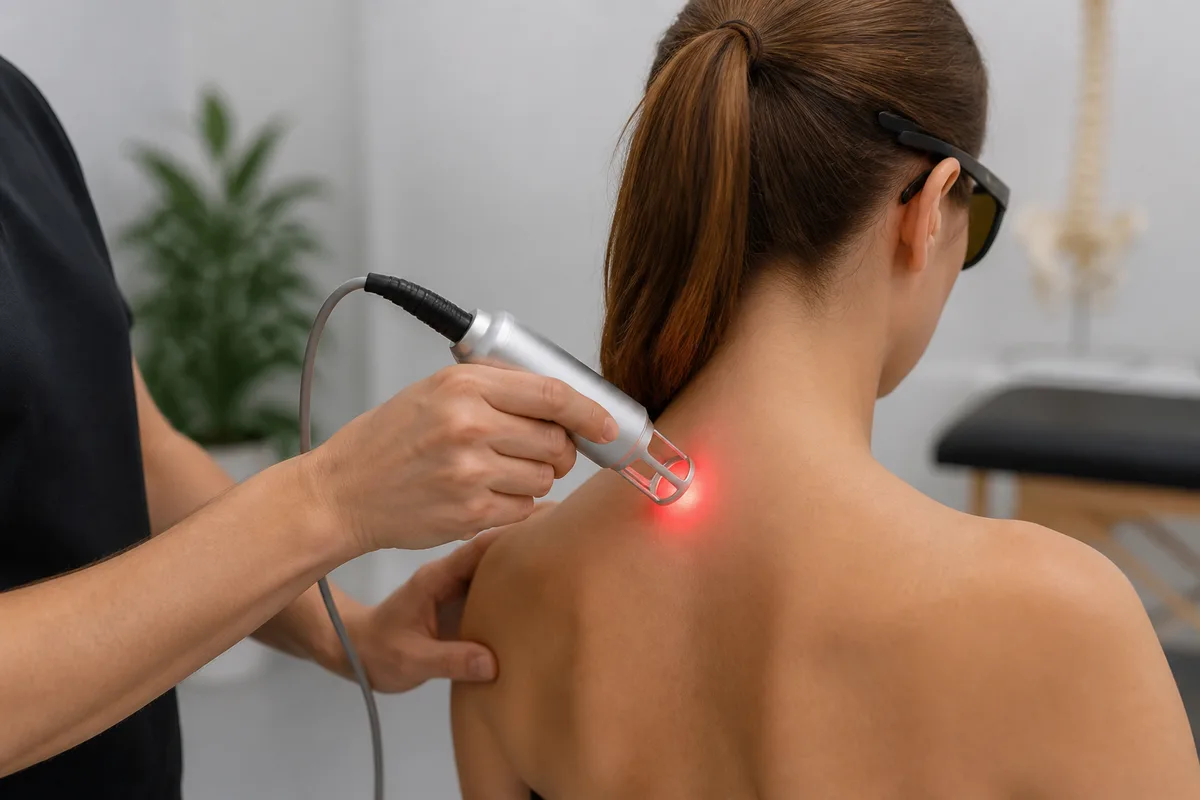
Cold Laser Therapy
Cold Laser Therapy is a non-invasive light therapy used to reduce pain and inflammation and promote healing. At Physical Therapy and Rehabilitation Center of Brooklyn, it is one of several tools available to support recovery from injury, surgery, and ongoing pain conditions.
What cold Laser Therapy is
Cold laser therapy, sometimes called low-level laser therapy, applies focused light of a specific wavelength to tissue near the surface of the skin. Unlike surgical or cutting lasers, it does not generate heat that damages tissue — hence the term "cold." Instead, the light is absorbed by cells in the treated area, where it is thought to support the natural processes involved in reducing inflammation and encouraging tissue repair.
This approach developed as clinicians looked for ways to address pain and slow-healing tissue without relying solely on medication or invasive procedures. Because the light penetrates gently and the device is held close to or in contact with the skin, it offers a way to target a specific area directly, rather than treating the body as a whole.
It is commonly considered for soft-tissue injuries, joint pain, and areas where inflammation is limiting movement or comfort, often as one part of a broader rehabilitation plan rather than a stand-alone cure.
How we use it at Physical Therapy and Rehabilitation Center of Brooklyn
At our practice, cold laser therapy is used to reduce pain and inflammation and support healing as part of a patient's overall care plan. It is often applied alongside other services we offer, such as physical therapy, pain management, sports injury rehabilitation, and back injury rehabilitation, where reducing local inflammation can help a patient tolerate exercise and manual therapy more comfortably.
Because cold laser therapy targets a localized area, it is typically used for a specific joint, muscle group, or region of complaint identified during a patient's evaluation, rather than as a general treatment. It can also be considered alongside other on-site options such as spinal decompression when a patient's plan calls for a combination of approaches to manage pain from multiple angles.
What it means for you
For patients, cold laser therapy offers a treatment option that does not involve needles, incisions, or medication, which can make it a comfortable addition to a rehabilitation plan. Sessions are typically brief and do not require recovery time, so patients can often continue with the rest of their scheduled therapy on the same visit.
Because the treatment is localized and non-invasive, it is generally well tolerated by a wide range of patients, including those who are also managing other health conditions. Discussing your specific goals with your provider helps clarify how cold laser therapy fits alongside the rest of your care plan.
- Non-invasive — no needles or incisions involved.
- Localized — light is directed at the specific area of concern.
- Convenient — sessions are brief and typically combined with other therapy.
What to expect during your visit
Before treatment, your provider will identify the area to be treated based on your evaluation and current symptoms. There is generally no special preparation needed — you may be asked to remove clothing or jewelry from the treatment area so the light can be applied directly to the skin.
During the session, a handheld device is held against or near the skin over the target area. Most patients feel little to nothing during treatment; some describe a mild warmth or tingling, though the device does not produce the heat associated with surgical lasers. Sessions are typically short, often lasting only a few minutes per area treated.
Afterward, there is no downtime. Many patients move directly into the rest of their scheduled physical therapy session, such as exercise or manual treatment, since cold laser therapy is usually one part of a longer visit rather than the entire appointment.
Is cold laser therapy safe?
Cold laser therapy is a non-invasive treatment that does not involve cutting, needles, or heat-based tissue damage. Your provider will review your health history to determine whether it is an appropriate option for your specific situation.
Does cold laser therapy hurt?
Most patients do not find cold laser therapy painful. Some notice a mild warming or tingling sensation in the treated area, but the treatment does not involve the heat or discomfort associated with surgical lasers.
How long does a session take, and how many will I need?
A typical session is brief, often just a few minutes for each area treated. How many sessions are recommended depends on your individual condition and treatment plan, which your provider will discuss with you.
Who is cold laser therapy appropriate for?
Cold laser therapy is generally considered for patients dealing with localized pain or inflammation, such as from a soft-tissue injury or joint condition. Your provider can help determine whether it is a suitable part of your overall rehabilitation plan based on your history and goals.
If you would like to learn more about whether cold laser therapy could be part of your care, reach out to Physical Therapy and Rehabilitation Center of Brooklyn to schedule a visit and discuss your options.
This content is for general information only and isn't medical advice. Talk with a qualified provider about your own situation. If you have a medical emergency, call 911.