Exercise Balls
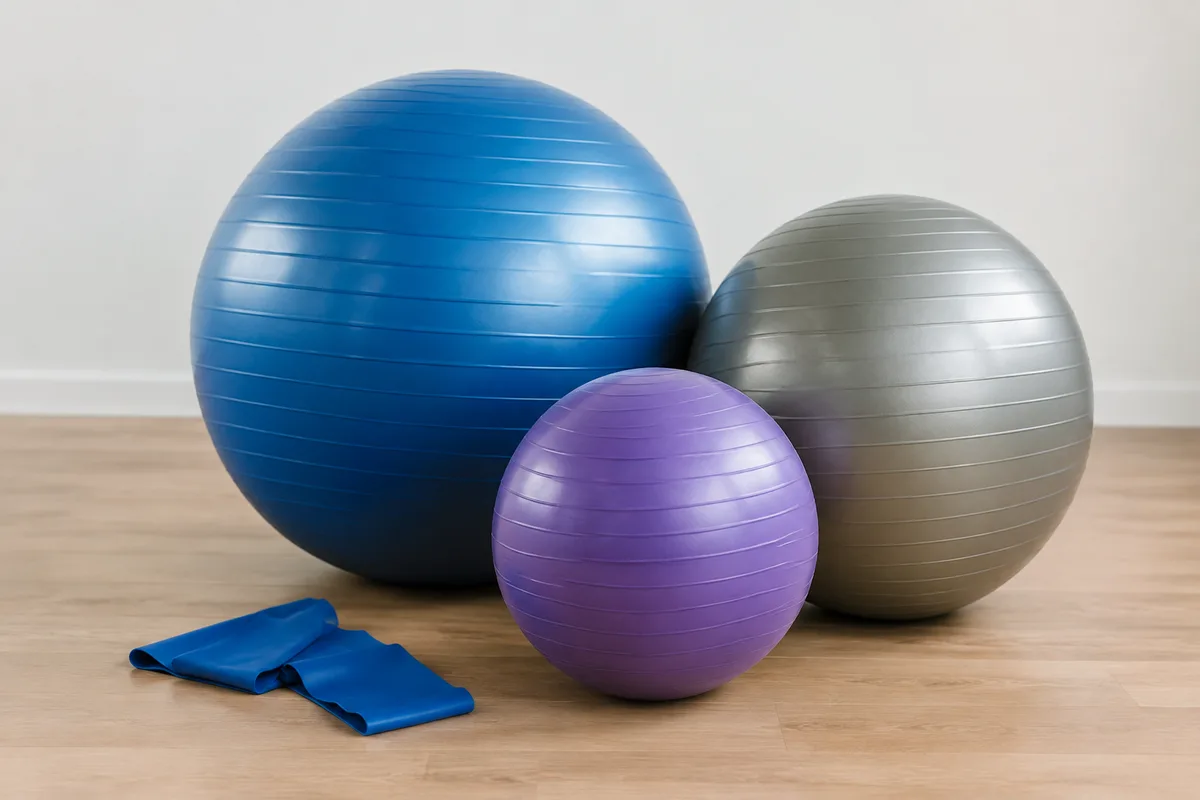
Exercise Balls
Stability balls, sometimes called exercise balls or Swiss balls, are a simple but versatile tool used throughout physical therapy to build core strength, retrain balance, and encourage gentle mobility work. At Physical Therapy and Rehabilitation Center of Brooklyn, exercise balls are part of the on-site equipment used to support a range of therapy programs for patients in Brooklyn, NY.
What exercise Balls is
An exercise ball is an inflatable, air-filled sphere large enough for a person to sit, lean, or lie on. Because the ball is unstable by design, the body must continuously make small adjustments to stay balanced on it. This constant, low-level muscle engagement is what makes the ball useful in rehabilitation: it recruits the deep core and postural muscles that are harder to isolate with a fixed surface, such as a mat or a rigid bench.
Before stability balls became common in clinical settings, many core and balance exercises relied on flat, stable surfaces that gave the body less feedback and less reason to self-correct. The ball's give and roll add a controlled element of instability, which lets a therapist scale an exercise up or down simply by changing the size of the ball, the patient's position on it, or the surface it rests on.
How we use it at Physical Therapy and Rehabilitation Center of Brooklyn
Exercise balls at our practice are used for core strength, balance, and gentle mobility work, often as part of a broader exercise therapy or balance training program. They pair naturally with other equipment on site, such as exercise mats for supported floor positions, balance pads and balance boards for progressing stability challenges, and treatment tables for patients transitioning in and out of ball-based positions safely.
Because the ball can be used seated, kneeling, or lying over it, it fits into many of the rehabilitation programs offered here, including general physical therapy, back injury rehabilitation, and post-surgical rehabilitation, where gradual, controlled loading of the trunk and hips is often part of recovery. The specific way the ball is used — for a seated posture drill, a gentle spinal mobility exercise, or a balance challenge — is set according to each patient's plan of care.
What it means for you
Working with an exercise ball can make core and balance training feel less mechanical and more responsive, since the ball reacts to small shifts in weight and position. For many patients, this makes it easier to feel which muscles are engaging and to notice progress as balance and control improve over time.
Because the ball's size and the exercise position can be adjusted, sessions can typically be tailored to a wide range of starting fitness and comfort levels. This flexibility can make it a comfortable entry point for patients who are early in a recovery process, as well as a continued challenge for those working toward more advanced balance or strength goals.
What to expect during your visit
If exercise balls are part of your session, your therapist will typically start by choosing a ball size appropriate to your height and the exercise planned. You may be guided into position — seated, kneeling, or lying back or forward over the ball — with hands-on support or a nearby treatment table for stability as needed.
During the exercise, you will likely be asked to hold a position, perform small controlled movements, or shift your weight while maintaining balance. Sessions involving the ball are usually brief segments within a longer visit rather than the entire appointment, and your therapist will adjust the difficulty based on how you respond. Afterward, you may be given similar exercises to continue as part of a home program.
Frequently asked questions
Is using an exercise ball safe?
Exercise ball work is generally considered safe when guided by a therapist who selects the right size, position, and level of support for your condition. Your therapist will supervise the exercise and provide hands-on assistance if balance is a concern.
Will I feel unsteady on the ball?
Some mild instability is expected and is part of what makes the exercise effective for training balance and core control. Support, such as a nearby table or a therapist's guidance, is typically used to keep the exercise controlled and comfortable.
How long is a typical exercise ball session?
Exercise ball exercises are usually a portion of a larger therapy visit rather than a standalone appointment, so the time spent on the ball can vary depending on your treatment plan and goals.
Who is exercise ball work suitable for?
Exercise balls can be used across a range of ages and conditions, from general strengthening and balance training to recovery from injury or surgery, with the exercise adjusted to match each patient's needs. Your therapist will determine whether it fits appropriately into your specific plan of care.
If you have questions about how exercise balls or other balance and strengthening tools might fit into your care, reach out to Physical Therapy and Rehabilitation Center of Brooklyn to learn more or schedule a visit.
This content is for general information only and isn't medical advice. Talk with a qualified provider about your own situation. If you have a medical emergency, call 911.