Stationary Bikes
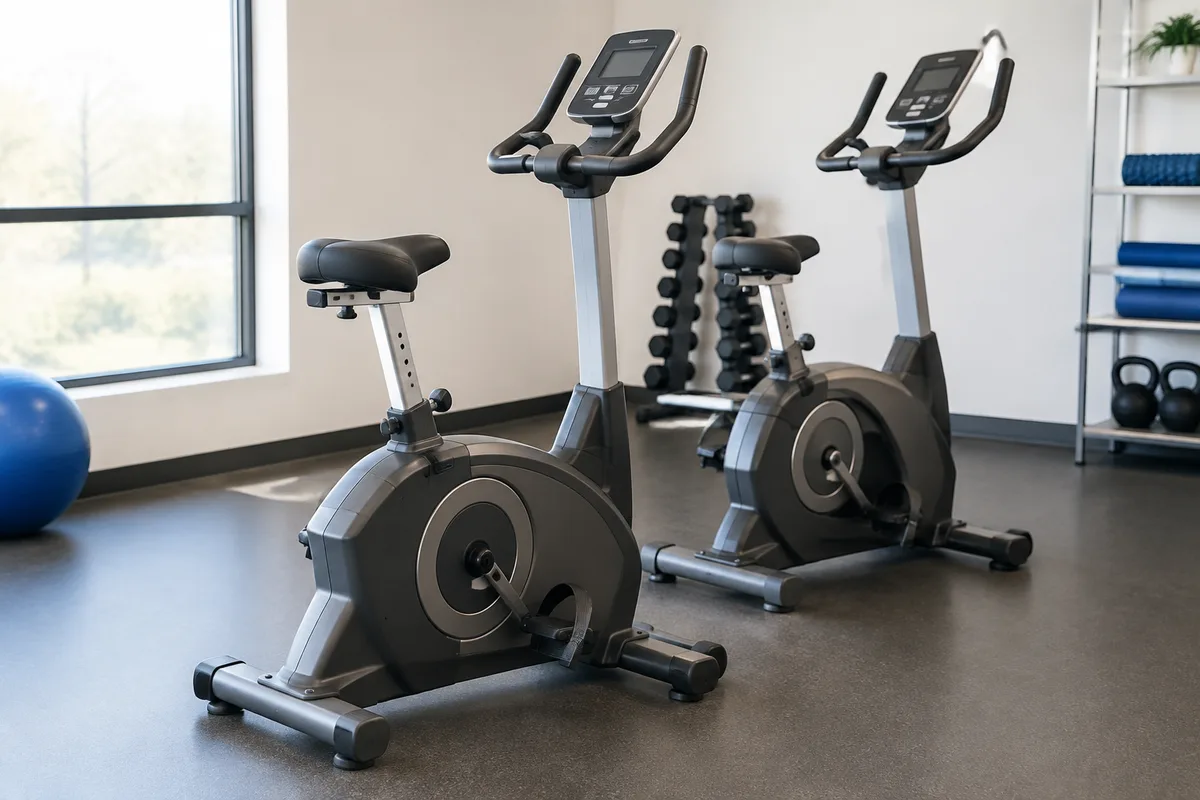
Stationary Bikes
Stationary bikes are a standard piece of rehabilitation equipment used to rebuild endurance, restore knee motion, and strengthen the legs in a controlled, low-impact way. At Physical Therapy and Rehabilitation Center of Brooklyn, cycling is one of the tools used as part of a broader exercise therapy program for patients recovering from injury, surgery, or periods of reduced activity.
What stationary Bikes is
A stationary bike is a fixed exercise cycle that lets a person pedal in place while seated, with resistance and seat position that can be adjusted to match ability level. Unlike outdoor cycling or higher-impact cardio activities such as running, stationary cycling keeps the joints moving through a controlled, repeatable range of motion without the jarring forces that come from foot strike or uneven terrain.
This makes it useful for people who need to rebuild cardiovascular fitness or leg strength but cannot yet tolerate impact-based exercise. The seated, supported position also reduces balance demands compared to walking or standing exercises, which is part of why it has become a common early- and mid-stage tool in physical therapy programs.
How we use it at Physical Therapy and Rehabilitation Center of Brooklyn
Stationary bikes are part of the on-site exercise equipment used within our exercise therapy and rehabilitation programs. Cycling sessions are typically incorporated as one component of a larger plan that may also draw on treadmills for gait and conditioning work, resistance bands and dumbbells for progressive strengthening, and balance equipment for stability training — allowing a program to move from lower-demand cycling toward more functional, weight-bearing activity as appropriate.
Because cycling is gentle on the knee joint while still encouraging motion and muscle activation, it is often used in programs addressing knee pain, post-surgical rehabilitation, and general reconditioning after a period of inactivity or injury. The resistance and duration are set to match what a person can currently manage, with adjustments made as strength and tolerance change.
What it means for you
For patients, stationary cycling offers a way to work on endurance and leg strength without the discomfort or risk that higher-impact activity might carry early in recovery. Because the exercise is seated and supported, it can feel more approachable for people who are hesitant to put weight through a healing joint or who are working to rebuild general stamina.
- Joint-friendly motion — pedaling moves the knee through a controlled arc without impact.
- Adjustable effort — resistance and duration can be scaled up or down as ability changes.
- Supported position — the seated setup reduces balance demands compared to standing exercise.
- Groundwork for progression — cycling can help build the base needed before moving to more demanding activities.
What to expect during your visit
If cycling is part of your session, you will typically be seated on the bike with the seat height adjusted so your knee moves comfortably through its range without straining. A clinician will set the resistance level based on what fits your current stage of recovery, and cycling time may range from a few minutes as a warm-up to a longer interval as a conditioning exercise, depending on your program.
During the ride, you may be asked about your comfort level, any pain, or how your breathing feels, and adjustments can be made in real time. Afterward, cycling is often followed by other exercises — such as stretching, strengthening, or balance work — as part of the same visit, and you should expect mild muscle fatigue afterward rather than sharp or lasting pain.
Frequently asked questions
Is stationary cycling safe after knee surgery?
Stationary cycling is generally considered a low-impact activity, which is part of why it is used in rehabilitation programs, including after knee-related procedures. Your specific readiness for cycling and the appropriate resistance level depend on your individual recovery, so it is used only when and how it fits your plan.
How long does a cycling session last?
Session length varies based on your program and goals, ranging from a short warm-up period to a longer interval focused on building endurance. Your plan will specify the duration that matches your current stage of rehabilitation.
Will cycling hurt if I have joint pain?
Cycling is chosen in part because it is gentler on the joints than higher-impact exercise, but resistance and duration are adjusted to your comfort level. You should communicate any pain or discomfort during a session so adjustments can be made.
Who is stationary cycling appropriate for?
Stationary cycling can be suitable for a wide range of patients, including those recovering from knee issues, general deconditioning, or other injuries where low-impact conditioning is helpful. Whether it fits your specific situation is something your clinician will determine as part of your overall treatment plan.
If you would like to know more about how stationary cycling could fit into your recovery, reach out to Physical Therapy and Rehabilitation Center of Brooklyn to ask about incorporating it into your treatment plan.
This content is for general information only and isn't medical advice. Talk with a qualified provider about your own situation. If you have a medical emergency, call 911.