Ultrasound Machines
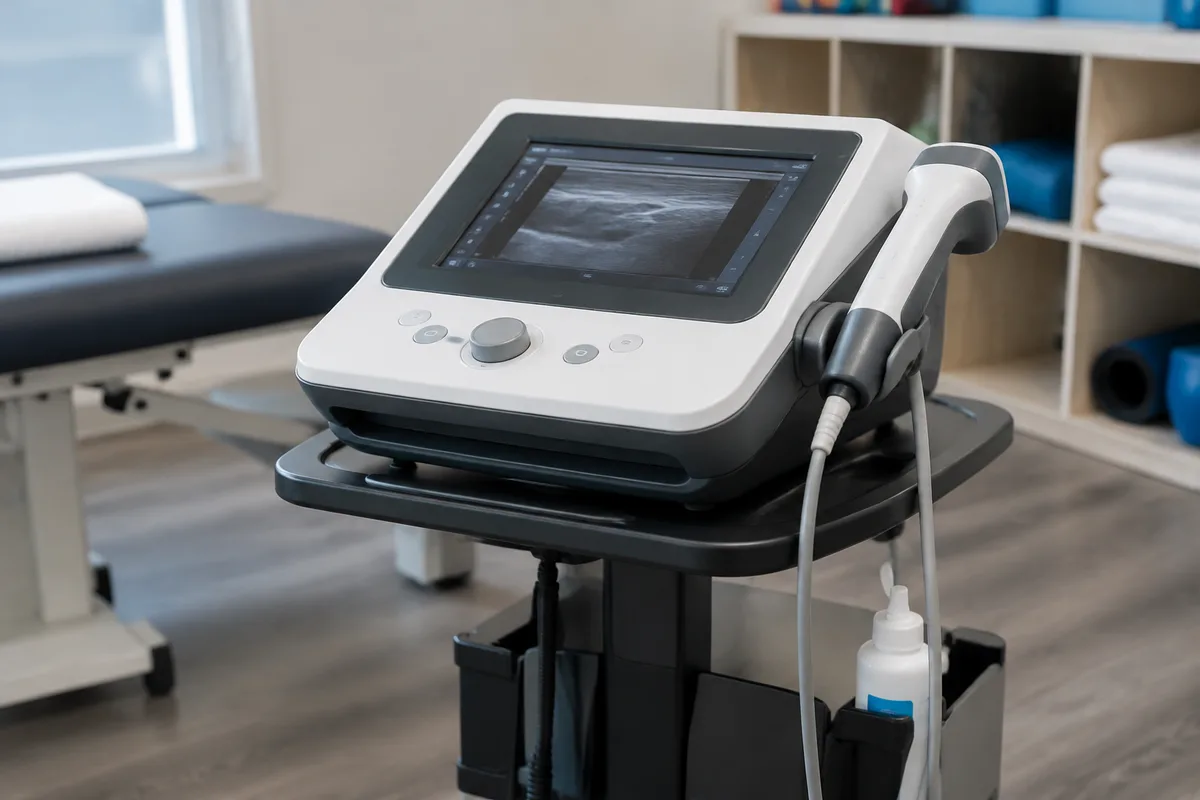
Ultrasound Machines
Therapeutic ultrasound is one of the tools used at Physical Therapy and Rehabilitation Center of Brooklyn to warm deep tissue, ease pain, and support the body's own healing process. It is a quiet, non-invasive part of many treatment plans and is often paired with hands-on therapy and targeted exercise.
What ultrasound Machines is
Therapeutic ultrasound uses sound waves delivered through a small handheld applicator to create gentle heat within muscles, tendons, and other soft tissue that lies below the skin's surface. A thin layer of gel helps the sound waves travel smoothly from the device into the tissue. Unlike surface heat packs, which mainly warm the skin and the tissue just beneath it, ultrasound can reach deeper structures, making it useful for issues that sit further from the surface.
The technology has been used in rehabilitation settings for decades and continues to be valued because it is adjustable — the intensity and depth of treatment can be tailored to the tissue being addressed and the stage of healing a patient is in. It is generally categorized as a form of deep-heat therapy, distinct from cold-based modalities that are used to calm acute swelling.
How we use it at Physical Therapy and Rehabilitation Center of Brooklyn
At our practice, ultrasound machines are one of several modalities available to support a treatment plan alongside manual therapy, exercise, and other equipment on site. Warming tissue with ultrasound before hands-on work or stretching can make those following steps more comfortable and effective, which is why it is often used as a preparatory step rather than a stand-alone treatment.
Ultrasound therapy may be incorporated into care plans for conditions such as back pain, neck pain, shoulder pain, knee pain, and tendonitis, where deep tissue often benefits from added warmth and increased circulation. It is frequently used in combination with other on-site resources — for example, moist heat packs before a session, or electrical stimulation units and manual therapy afterward — as part of a broader approach to easing pain and supporting movement.
Because every patient's condition is different, the decision to include ultrasound in a plan is made individually, based on the specific area being treated and how the tissue is responding over time.
What it means for you
For patients, ultrasound therapy offers a comfortable, non-invasive way to address deep muscle and soft-tissue discomfort without needles or incisions. Because it targets tissue below the surface, it can complement other therapies that work more on the surface or on strength and movement, giving a more complete approach to recovery.
The treatment itself typically causes no discomfort — most patients feel only a mild, gentle warmth. This can make subsequent stretching or manual therapy feel more comfortable, since warmed tissue tends to be more pliable. Ultrasound also does not require any downtime, so patients can move directly into the rest of their session or return to daily activities afterward.
What to expect during your visit
During a session that includes ultrasound therapy, a clinician will apply a small amount of gel to the treatment area and move the ultrasound applicator slowly and steadily over the skin in that region. The device delivers sound waves that generate warmth beneath the surface; most people feel a light, soothing heat rather than any sharp sensation.
Treatment time for ultrasound is usually brief, often just a few minutes per area, and it is commonly used as one part of a longer visit that also includes manual therapy or exercise. There is no special preparation needed beforehand, and no recovery time needed afterward — patients can typically continue with the rest of their planned therapy right away.
Frequently asked questions
Is ultrasound therapy safe?
Therapeutic ultrasound is a well-established, non-invasive treatment that is generally considered safe when applied by a trained clinician. As with any treatment, your provider will review your history and the area being treated to make sure it is an appropriate fit for your situation.
Does ultrasound therapy hurt?
No — most patients describe the sensation as a mild, gentle warmth rather than any pain. The applicator is moved smoothly over the skin, and the treatment is typically relaxing rather than uncomfortable.
How long does a session take, and how often is it used?
A single ultrasound application usually takes only a few minutes and is often combined with other parts of a treatment session, such as manual therapy or exercise. How often it is used depends on the individual plan developed for your specific condition.
Who is ultrasound therapy suitable for?
Ultrasound therapy is commonly used for patients dealing with deep muscle or soft-tissue discomfort, including back, neck, shoulder, and knee pain, as well as tendon-related issues. Whether it is right for you depends on your specific condition, which your clinician will assess before including it in your plan.
If you would like to learn more about whether ultrasound therapy fits your treatment plan, reach out to Physical Therapy and Rehabilitation Center of Brooklyn to ask about scheduling a visit.
This content is for general information only and isn't medical advice. Talk with a qualified provider about your own situation. If you have a medical emergency, call 911.